What is Tai Chi Walking - and is it worth a try?
Peer reviewed by Dr Colin Tidy, MRCGPAuthored by Victoria RawOriginally published 1 Apr 2026
Meets Patient’s editorial guidelines
- DownloadDownload
- Share
- Language
- Discussion
- Audio Version
- Add to preferred sources on Google
The martial art of Tai Chi has been around for centuries. Originally developed as a form of self-defensive combat, it’s still going strong today - though its greatest strength now lies in its ability to support overall health and wellbeing.
For something so ancient, it’s impressive that Tai Chi is still finding new relevance in today’s wellness world. One of the latest ways it’s being embraced - particularly across online platforms - is through a more accessible adaptation of the practice known as Tai Chi Walking.
Sign up for our free 10-week Healthy Ageing course
Take the first step to feeling your best as you grow older. Each week, we'll focus on different areas to help you age well and maintain a healthy body and mind, including exercise, diet, anti-ageing supplements, healthy brain ageing, and bone and joint health.
By subscribing you accept our Privacy Policy. You can unsubscribe at any time. We never sell your data.
In this article:
Video picks for Exercise and physical activity
Continue reading below
What is Tai Chi?
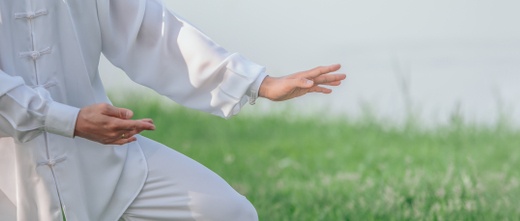
Tai Chi, also known as Tai Chi Chuan (Taijiquan), originated in China as a form of martial arts training. Over time, it has evolved into one of the most respected practices in Chinese culture for promoting health, balance, and longevity.
Dr Mao Shing Ni, Tao of Wellness, California, USA, is a Tai Chi master and a board-certified specialist in longevity. He explains that the term Tai Chi refers to the ultimate balance of yin and yang - the dynamic harmony between opposing forces such as movement and stillness, strength and softness, and effort and relaxation.
“In practice, Tai Chi consists of slow, flowing movements performed with awareness of breath, posture, and internal energy, which Chinese medicine calls Qi,” says Ni.
“Unlike many exercises that isolate muscles, Tai Chi trains your entire body as one integrated system. The mind guides the movement, the breath regulates the rhythm, and the body follows smoothly. In this way, Tai Chi becomes a form of moving meditation - strengthening the body while calming and focusing the mind.”

Learning Tai Chi the right way
Ni recommends that if you’re interested in learning Tai Chi, the best way to practise it correctly is with a qualified teacher.
He points out that while Tai Chi may look simple from the outside, the internal principles are actually quite subtle. A skilled teacher can guide you through key elements, such as proper alignment of your spine and joints, coordinating breath with movement, shifting weight safely and efficiently, and maintaining stability while staying relaxed.
“Without direct guidance from a teacher, beginners often rely only on imitation,” says Ni. “You may tense your body, collapse posture, or move mechanically, which reduces the benefits and sometimes creates strain.”
He adds that, traditionally, Tai Chi was taught through direct transmission, with the teacher guiding posture and helping students sense the internal flow of movement. This kind of hands-on feedback speeds up learning and helps practitioners develop the deeper aspects of the art.
How Tai Chi supports mind and body wellbeing
Back to contentsWith consistent practice and guidance, Tai Chi offers a wide range of health benefits. Beginners often start to feel confident with the basic movements after just a few weeks of regular practice. While mastering a complete form can take several months, the positive effects on health can be noticed much earlier.
Ni explains that Tai Chi is often described as “meditation and healing in motion”.
He adds that practising it regularly can benefit your:
Joint mobility and flexibility.
Circulation and heart health.
Muscle coordination and strength.
Posture and spinal alignment.
“Because movements are performed with focused attention, Tai Chi also helps improve your concentration, enhance your body awareness and sharpen your memory and cognitive function,” says Ni. “Modern studies even suggest Tai Chi may support brain health and neuroplasticity.
“From a Chinese medicine perspective, Tai Chi helps regulate Qi and calm the spirit, which we call Shen. Practitioners often experience reduced stress and anxiety, improved emotional resilience, and a greater sense of inner balance.”
Staying safe while practising Tai Chi
According to Ni, Tai Chi is generally considered a very safe practice, which is why it’s often recommended for older adults and those recovering from illness.
However, for the best results and to ensure safety, it really should be mastered under the guidance of a teacher. Without proper instruction, people can sometimes lock their knees or joints, lean too far forwards or backwards, or move with unnecessary tension.
Ni explains that these habits can occasionally put strain on your knees, hips, or lower back. That said, injuries from Tai Chi are extremely rare, and it is considered safe for most people.
“People who should be especially careful include those with severe balance disorders, those recovering from major joint surgery or those with acute injuries,” says Ni. “For them, Tai Chi can still be beneficial, but it should be modified and taught carefully.”
Exploring Tai Chi Walking for beginners and beyond
Tai Chi Walking - sometimes called the Tai Chi walking method - is a trend that has spread across social media, and as a result, more and more people have started practising it. This allows them to enjoy some of the health benefits of Tai Chi, even without committing to the full traditional practice.
Ni describes Tai Chi Walking as a simplified approach that brings the principles of Tai Chi to life through walking.
“Instead of performing a full sequence of movements, practitioners walk slowly and intentionally while maintaining upright posture, smooth weight transfer, relaxed breathing, and awareness of each step,” he says.
“Each step is placed with mindfulness and balance, almost as if the foot is gently 'testing the ground’. Compared to full Tai Chi forms, Tai Chi walking is simpler and easier to learn, making it accessible to beginners.”
Why Tai Chi Walking has become a wellness trend
Tai Chi Walking draws from traditional walking practices designed to enhance balance and provide a deep sense of grounding. Closely linked to mindful walking meditation, it uses simple, intentional movements to foster greater awareness and promote internal harmony.
Ni explains that many people today are feeling overwhelmed by stress, technology, and constant stimulation. Tai Chi offers something very appealing - a simple way to slow down and reconnect with your body.
“It requires no equipment, no special location like a gym and no athletic ability,” he says. “People can practice it in a park, on a trail, or even in their backyard. In a world that often pushes us to move faster, Tai Chi Walking reminds us that health sometimes begins by slowing down.”
Continue reading below
A simple guide to Tai Chi Walking
Back to contentsTai Chi Walking is an easy and accessible way to practice mindfulness and improve your balance. While it's a good idea to check in with a professional for formal training, you can safely practice these simple steps on your own:
Starting stance
Footwear - wear comfortable shoes with a flat sole or thin socks on a non-slip surface.
Position - stand naturally with your feet parallel and hip-width apart, knees slightly bent.
Posture - keep your head up, chin tucked, and spine lengthened.
Shifting your weight
The shift - gradually shift your weight to your right leg, making it feel light.
The lift - lift your left leg slowly while keeping your knee bent and bring your foot forwards.
The forward step
Back to contentsHeel first - step forwards gently with your heel, toes pointed slightly upwards.
The roll - roll your foot from heel to ball until flat on the ground.
The transfer - shift your weight onto your left leg as your right heel lifts.
The arm movement
The push - as you shift your weight, coordinate your hands to ‘push’ the air from your chest.
Soft joints - keep your elbows and wrists rounded and unlocked.
Sync - your hands should finish the push when your weight settles on your front foot.
Continuing the flow
Repeat - with your weight on your left leg, lift your right leg, step forwards, roll your foot down, and shift your weight again.
Breathing - inhale as you lift your foot and exhale as you shift your weight and push.
Continue reading below
Is Tai Chi Walking good for you?
Back to contentsWalking is one of the easiest forms of exercise and comes with a wide range of health benefits. Tai Chi Walking, however, takes it a step further by incorporating posture, balance, and mindful awareness.
Ni explains that because steps are slower and weight shifts are more deliberate, Tai Chi Walking may improve balance and fall prevention, joint stability, leg strength, and coordination and awareness of posture.
“For heart health, it is typically lower intensity than brisk walking, but it can still support circulation and metabolic health,” he says. “It may be especially helpful for people with arthritis, balance issues, long-term stress and early neurological conditions affecting coordination.”
He adds that Tai Chi Walking naturally helps to quiet the mind. As your focus settles on the rhythm of your breath and steps, your nervous system gradually shifts from a state of fight-or-flight to one of relaxation and restoration.
“Many practitioners report reduced anxiety, improved focus and better emotional regulation,” says Ni.
Tai Chi Walking is especially helpful for older adults looking for low-impact exercise, anyone feeling stressed, those on the road to recovery, and anyone wanting a gentle introduction to mind-body practices.
Ni advises that anyone with significant mobility or balance challenges should start slowly.
He suggests helpful modifications, such as practising near a wall or rail for support, taking smaller steps, and moving at a comfortable pace. The aim isn’t to push your body, but to encourage smooth, natural movement.
“In Taoist philosophy, the highest form of practice is not intensity, but harmony,” Ni concludes. “Allowing the body to breath, and mind to move together with ease.”
Patient picks for Exercise and physical activity

Healthy living
Japanese walking: simple steps to a healthier you?
From jeffing to rucking, some of today’s fitness trends have rather interesting names. Japanese walking, also known as interval walking, is no exception. Developed in Japan, it’s a form of walking that’s suitable for most fitness levels and offers a range of health benefits. But don’t just take our word for it - let’s hear from the experts for a closer look.
by Victoria Raw

Healthy living
7 morning stretches to get you ready for the day
Most of us love the feeling of stretching first thing in the morning. However, chances are, you don't put much thought into what stretches you do. But did you know that there are specific stretches that will start your day off on the right note?
by Lynn Stephen
Sign up for our free 10-week Healthy Ageing course
Take the first step to feeling your best as you grow older. Each week, we'll focus on different areas to help you age well and maintain a healthy body and mind, including exercise, diet, anti-ageing supplements, healthy brain ageing, and bone and joint health.
By subscribing you accept our Privacy Policy. You can unsubscribe at any time. We never sell your data.
Continue reading below
About the author

Victoria Raw
Feature Writer
BA (Hons), English Literature
Victoria is a content writer with Patient whose special interests focus on mental wellbeing, societal trends and the impact of technology on our health.
About the reviewerView full bio

Dr Colin Tidy, MRCGP
General Practitioner, Medical Author
MBBS, MRCGP, MRCP (Paediatrics), DCH
Dr Colin Tidy is an NHS Doctor, based in Oxfordshire.
Article history
The information on this page is peer reviewed by qualified clinicians.
Next review due: 1 Apr 2029
1 Apr 2026 | Originally published
Authored by:
Victoria RawPeer reviewed by
Dr Colin Tidy, MRCGP

Ask, share, connect.
Browse discussions, ask questions, and share experiences across hundreds of health topics.

Feeling unwell?
Assess your symptoms online for free
Sign up to the Patient newsletter
Your weekly dose of clear, trustworthy health advice - written to help you feel informed, confident and in control.
By subscribing you accept our Privacy Policy. You can unsubscribe at any time. We never sell your data.